Source Utility Knife Options for Office, School, and Industrial Use
Explore 30 utility knife listings from verified manufacturers in China. Compare retractable and folding designs made from carbon steel or stainless steel, featuring ABS handles and CE certification for office, school, and industrial applications; compare the available evidence and request quotations based on your requirements.
Key considerations
Products List








Comprehensive Sourcing Guide
Utility Knife Sourcing Guide
The utility knife market presents a diverse range of options, from industrial-grade cutting tools to office and school supplies. Buyers must distinguish between retractable models designed for safety and folded variants optimized for portability. Observed listings indicate a strong presence of carbon steel and stainless steel blades, with specific models like the XL-17019 and MTA1348 representing distinct functional categories. Understanding these material differences is critical for selecting the right tool for specific tasks, whether in a manufacturing environment or a general office setting.
Procurement strategies should account for the wide variance in minimum order quantities and packaging requirements found in current listings. Some suppliers offer low MOQs for promotional items, while others require bulk commitments of 2000 pieces for specialized industrial knives. Packaging details vary significantly, ranging from individual blister cards to bulk carton shipments, which directly impacts logistics planning and storage costs. Buyers need to align their order volume with supplier capabilities to ensure cost-effective delivery and inventory management.
Product Scope and Observed Listing Signals
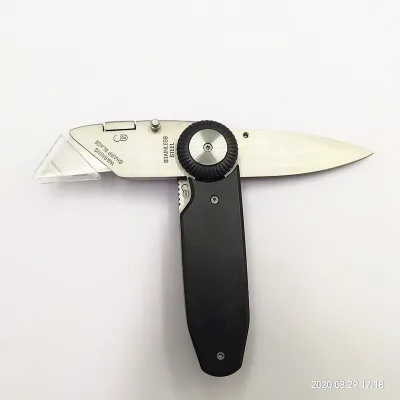
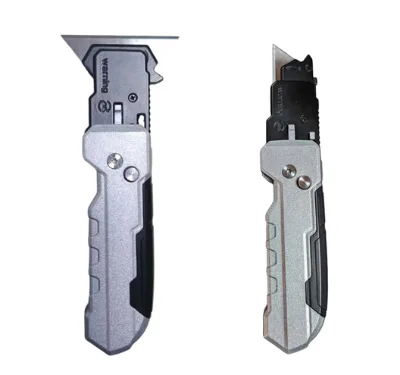
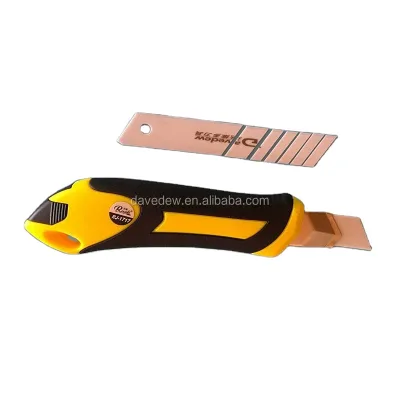
Buyers should verify the specific application context before selecting a utility knife, as listings explicitly target office, school, and promotional use cases alongside industrial applications. The observed product range includes single-style knives with sharp heads, as well as multi-functional variants suitable for combat or camping scenarios. It is essential to confirm that the blade material, such as 2Cr13 stainless steel or standard carbon steel, matches the intended durability requirements for the specific work environment.
The physical configuration of the knife is another critical signal, with options available in both unfolded and folded states. Retractable designs offer enhanced safety for general office use, while folded models provide compact storage for field operations. Sourcing teams must cross-reference the listed type, such as "Utility Knife" or "Gear Cutter," with actual operational needs to avoid purchasing tools that are either over-engineered or insufficient for the task.
Technical Specifications to Verify
Technical due diligence requires a close examination of blade thickness and overall dimensions to ensure compatibility with specific cutting tasks. Listings provide precise measurements, such as a thickness of 0.64mm and single package sizes of 12x4x2.5 cm, which serve as benchmarks for quality assessment. Buyers should request detailed dimension sheets for any custom orders to confirm that the blade geometry meets the required cutting depth and edge retention standards.
Handle material and head type are equally important specifications that influence user comfort and safety during extended use. The observed use of ABS plastic for handles suggests a focus on durability and grip, while the sharp head design indicates a focus on precision cutting. Procurement teams must verify that the handle material is non-toxic and that the head type aligns with the specific cutting angles required for the intended application, ensuring both operator safety and cutting efficiency.
Compliance and Safety Documentation
Compliance verification is a mandatory step, as observed listings cite certifications such as CE, RoHS, and ISO9001, which indicate adherence to international safety and quality standards. Buyers must request valid certification documents to confirm that the products meet the regulatory requirements of their target markets, particularly for items intended for school or office environments where safety is paramount. The presence of these certifications should be validated against the specific product model to ensure they are not generic claims.
Safety documentation should also include material safety data sheets and non-toxicity confirmations, especially for products marketed for promotional or educational use. The observed advantage of being non-toxic is a key selling point that requires substantiation through third-party testing reports. Procurement teams should ensure that all safety claims are backed by verifiable evidence to mitigate liability risks and ensure the products are safe for end-users in various environments.
Cost Drivers and Commercial Terms
Cost structures in the utility knife market are heavily influenced by material selection, customization levels, and order volume. The availability of OEM and ODM support allows for tailored solutions, but these services often come with higher minimum order quantities and longer lead times. Buyers should analyze the trade-off between standard models and customized versions to determine the most cost-effective approach for their specific volume requirements and branding needs.
Commercial terms, including delivery methods and packaging details, significantly impact the total landed cost of the procurement. Listings indicate delivery by sea, which is suitable for large volumes but requires careful planning for lead times. Packaging options, ranging from individual blister cards to bulk cartons, affect both shipping costs and storage efficiency. Buyers must negotiate clear terms regarding packing details to optimize logistics and minimize handling expenses.
Supplier Qualification and Quality Control
Supplier qualification should focus on verifying the origin and manufacturing capabilities, as observed listings indicate production in regions like Zhejiang and Guangdong, China. Buyers must assess the supplier's ability to maintain consistent quality across different product lines, from simple office knives to complex multi-functional tools. Requesting samples and reviewing past performance data is essential to ensure the supplier can meet the required specifications and delivery schedules.
Quality control processes must be robust, with a focus on verifying the condition of the products as new and ensuring adherence to standard specifications. The observed standard of "As per request" suggests flexibility, but buyers must define clear quality benchmarks to prevent deviations. Implementing a rigorous inspection protocol, including checks for blade sharpness and handle integrity, is crucial to maintaining product reliability and customer satisfaction throughout the supply chain.
Long-Term Procurement Checks
Long-term procurement success depends on establishing a reliable supply chain that can adapt to changing market demands and regulatory requirements. Buyers should maintain open communication with suppliers to stay informed about updates in material standards and safety regulations. Regular audits and performance reviews help ensure that the supplier continues to meet the agreed-upon quality and delivery standards over time.
Sustainability and product lifecycle management are also critical considerations for long-term sourcing strategies. Buyers should evaluate the environmental impact of the materials used, such as the recyclability of ABS handles and stainless steel blades. Developing a partnership with suppliers who prioritize sustainable practices and continuous improvement will help mitigate risks and ensure a stable supply of high-quality utility knives for future needs.
FAQs
What certifications are available for utility knives?
Certifications such as CE, RoHS, and ISO9001 are available for these utility knives. These standards ensure compliance with international safety and quality requirements. Buyers can request specific documentation to verify product authenticity. This support is essential for importing goods into regulated markets. The availability of these certificates helps streamline the customs clearance process for international shipments.
Can I customize the utility knife design?
Yes, customization is available for utility knife orders. Buyers can request OEM or ODM support to tailor the product. This includes modifying the handle material, blade type, or packaging details. The supplier accepts custom requests to meet specific branding needs. This flexibility allows businesses to create unique products that align with their market strategy.
What is the typical MOQ for utility knives?
The typical MOQ for utility knives is 2000 pieces. This minimum order quantity applies to standard customization requests. Buyers should confirm the exact MOQ with the supplier before placing an order. Meeting this threshold ensures efficient production scheduling and cost-effective pricing. Smaller quantities may require different terms or higher per-unit costs.
How are utility knives packaged for shipment?
Utility knives are packaged in various options including OPP bags, inner boxes, and cartons. Each piece may also come in a blister card for retail display. The standard packing detail is 1000 pieces per carton. This robust packaging protects the knives during transit. Buyers can choose packaging that suits their retail or industrial distribution needs.
Where are these utility knives manufactured?
These utility knives are manufactured in China, specifically in Zhejiang Ningbo and Guangdong. These regions are known for their manufacturing capabilities in tools and hardware. The origin ensures access to established supply chains and skilled labor. Buyers can verify the specific factory location during the sourcing process to ensure quality control.
What materials are used for the utility knife blades?
Blades are typically made from carbon steel or stainless steel variants like 2Cr13. These materials provide durability and sharpness for various cutting tasks. The choice of material depends on the specific application requirements. Stainless steel options offer better corrosion resistance for office or outdoor use. Buyers should select the material that best fits their intended usage environment.